
My Continuing Education Week at Chautauqua
What your pastor did with one of her two continuing education weeks.
One of the gifts of ministry is that continuing education does not always have to look like sitting in a classroom under fluorescent lights taking notes from a PowerPoint. Sometimes it can look like walking beneath enormous old trees, listening to music drift out of an amphitheater, attending worship in the morning, hearing a lecture in the afternoon, visiting an art gallery before dinner, and ending the day feeling as though your mind has been stretched in twelve different directions.
This summer, one of my two continuing education weeks was spent at the Chautauqua Institution in western New York, and it was unlike any continuing education experience I have ever had.
Chautauqua is difficult to describe because it is so many things at once. It is a summer community on a lake, filled with narrow streets, beautiful old houses, porches, gardens, chapels, lecture halls, galleries, and performance spaces. But it is also a kind of intellectual, artistic, and spiritual village. Every day offers an almost ridiculous number of choices: worship, theology, literature, politics, music, ballet, opera, environmental programs, writing workshops, art exhibits, and lectures on subjects I had never even thought to wonder about.
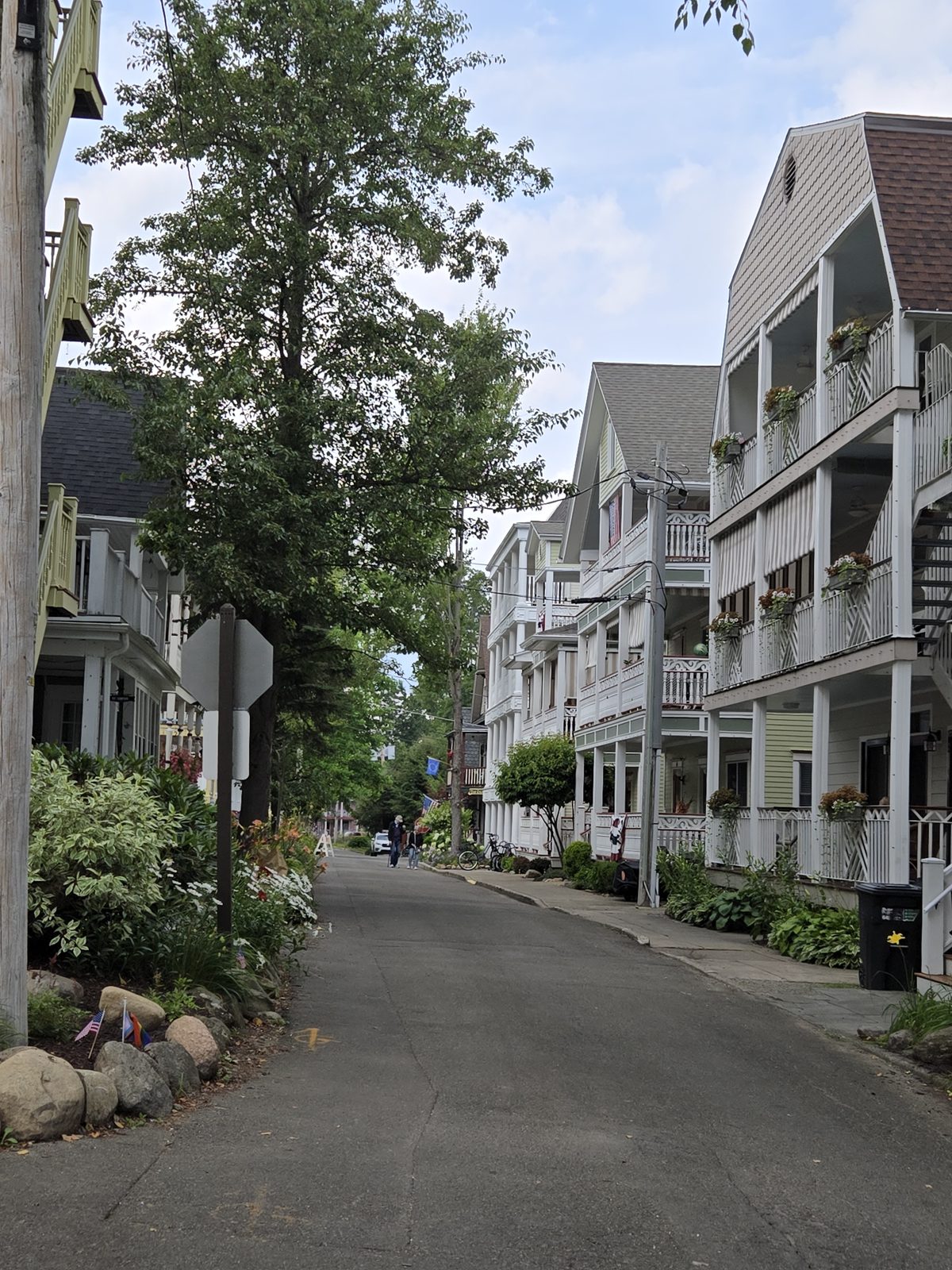
At first, I found the schedule almost overwhelming. There was simply no way to do everything. Eventually, though, that became part of the lesson. I had to choose what interested me most and accept that something wonderful would always be happening somewhere else.
My mornings quickly became my favorite part of the day. I would get up early to write, then walk for coffee and find a quiet place to sit. Sometimes that was near the lake; sometimes it was at the Hall of Philosophy, a wonderful open-air gathering place where theologians, writers, scholars, and public thinkers have spoken for generations. Sitting there with coffee, I found myself thinking about all the voices that had come through Chautauqua over the years—people like Elie Wiesel, John Shelby Spong, Diana Butler Bass, and countless others who have helped shape conversations about faith and public life.
Even when nothing formal was happening, Chautauqua seemed to be humming.
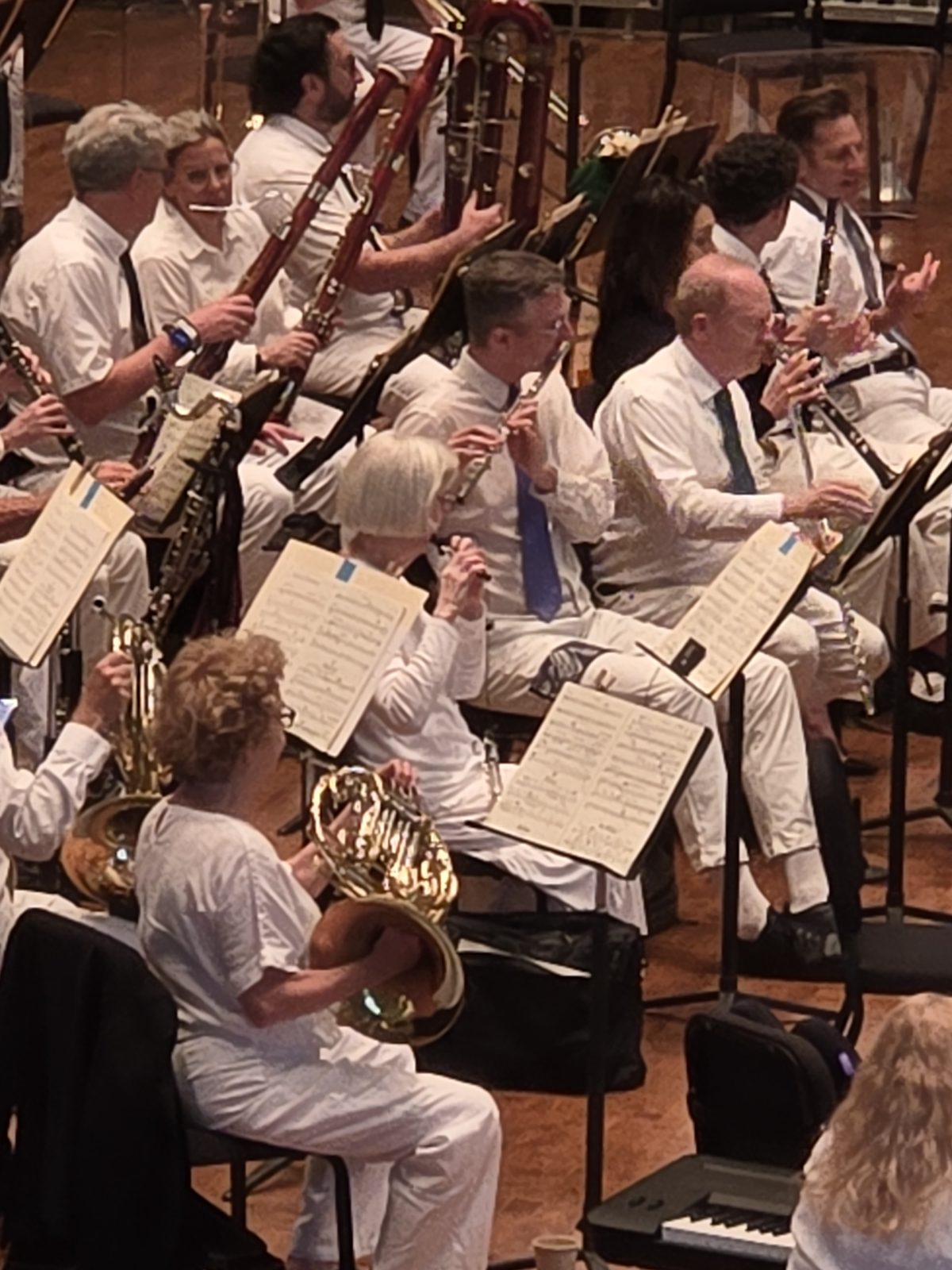
I stayed near the Amphitheater, so music was constantly drifting through the air. Singers rehearsed. Pianists practiced. The orchestra warmed up. The great organ came alive. One rainy morning, I sat with coffee listening to the rain and the birds while musicians rehearsed nearby, and it occurred to me that this was a pretty wonderful way to spend a workday.
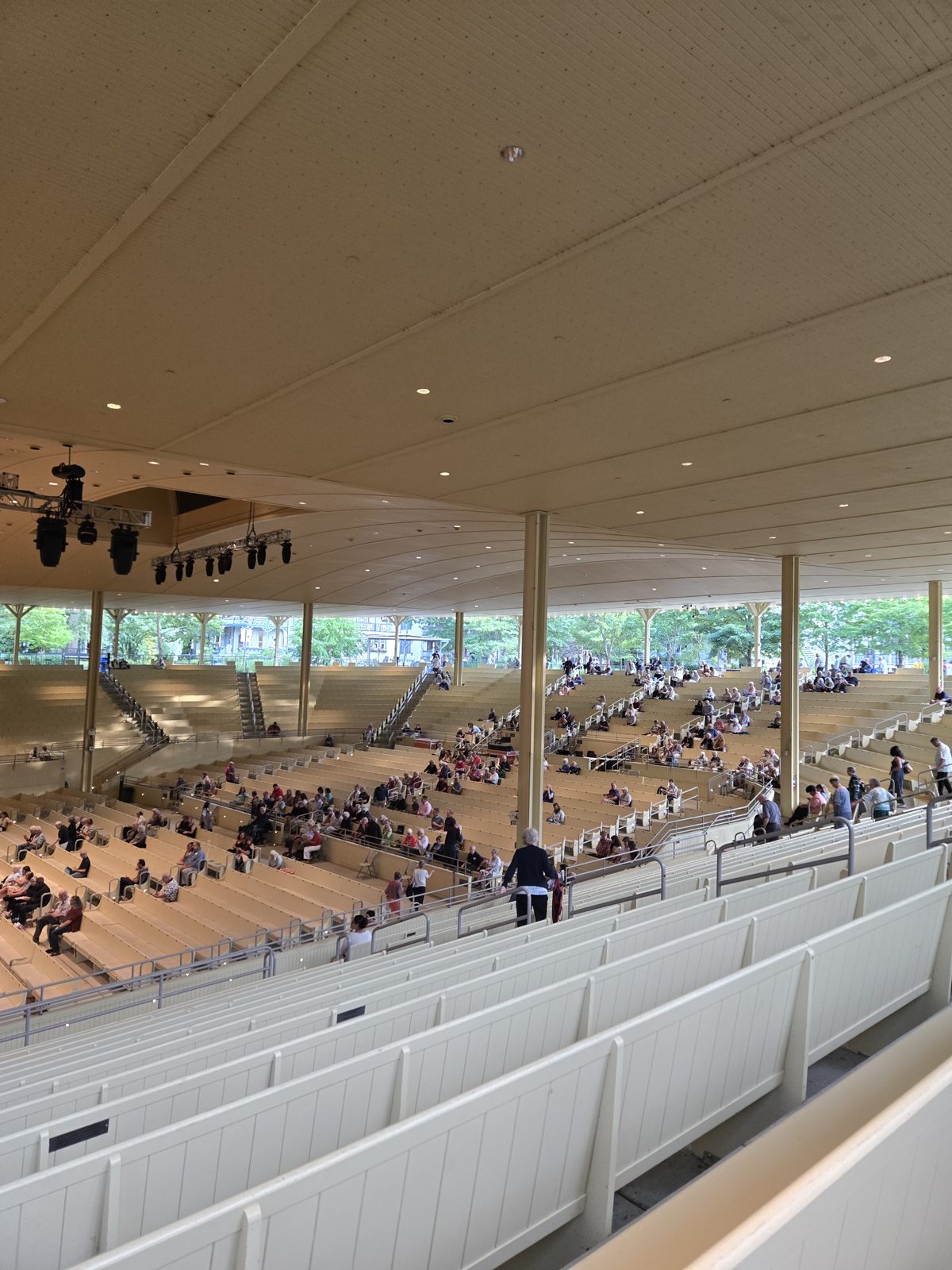
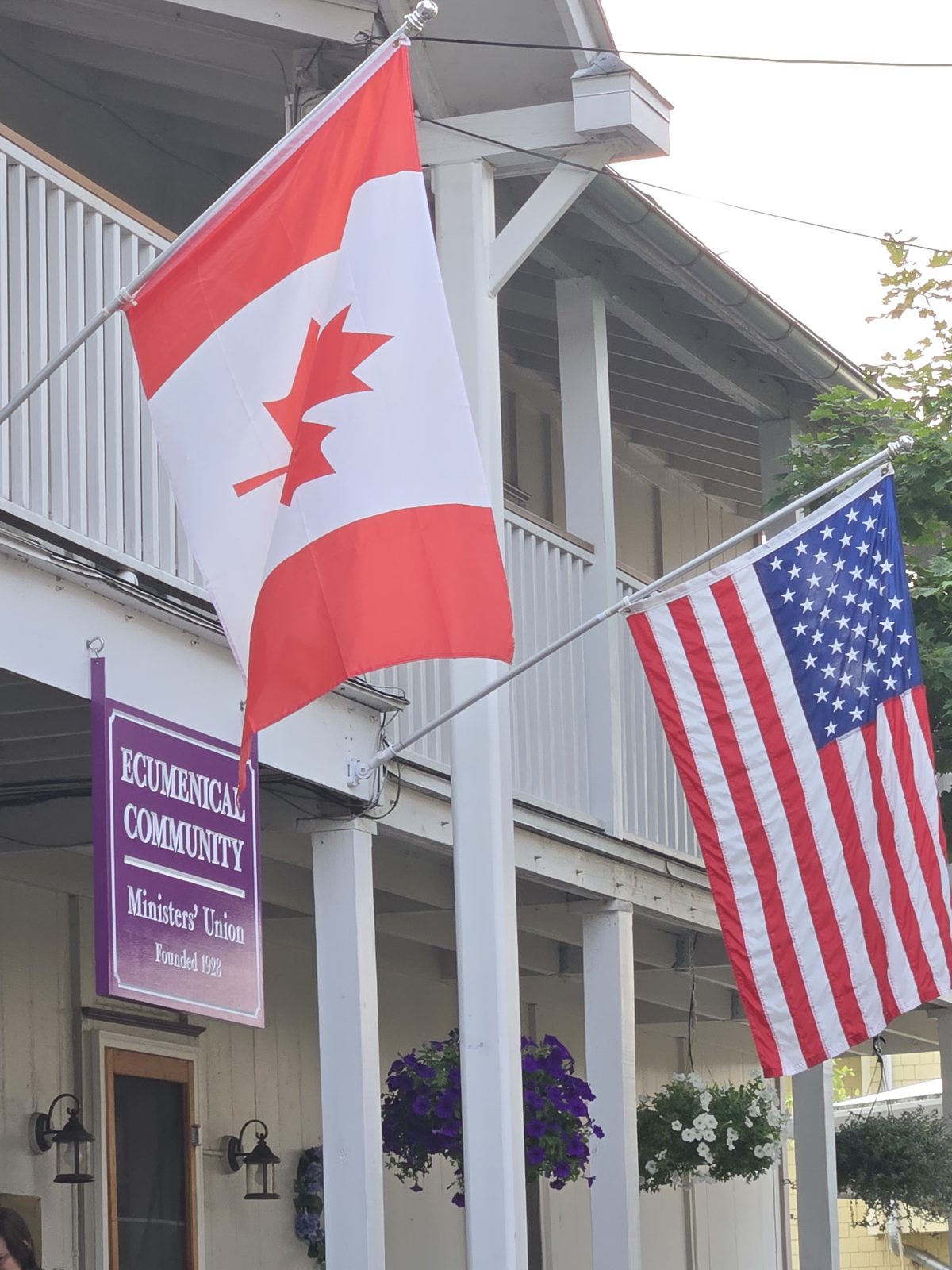
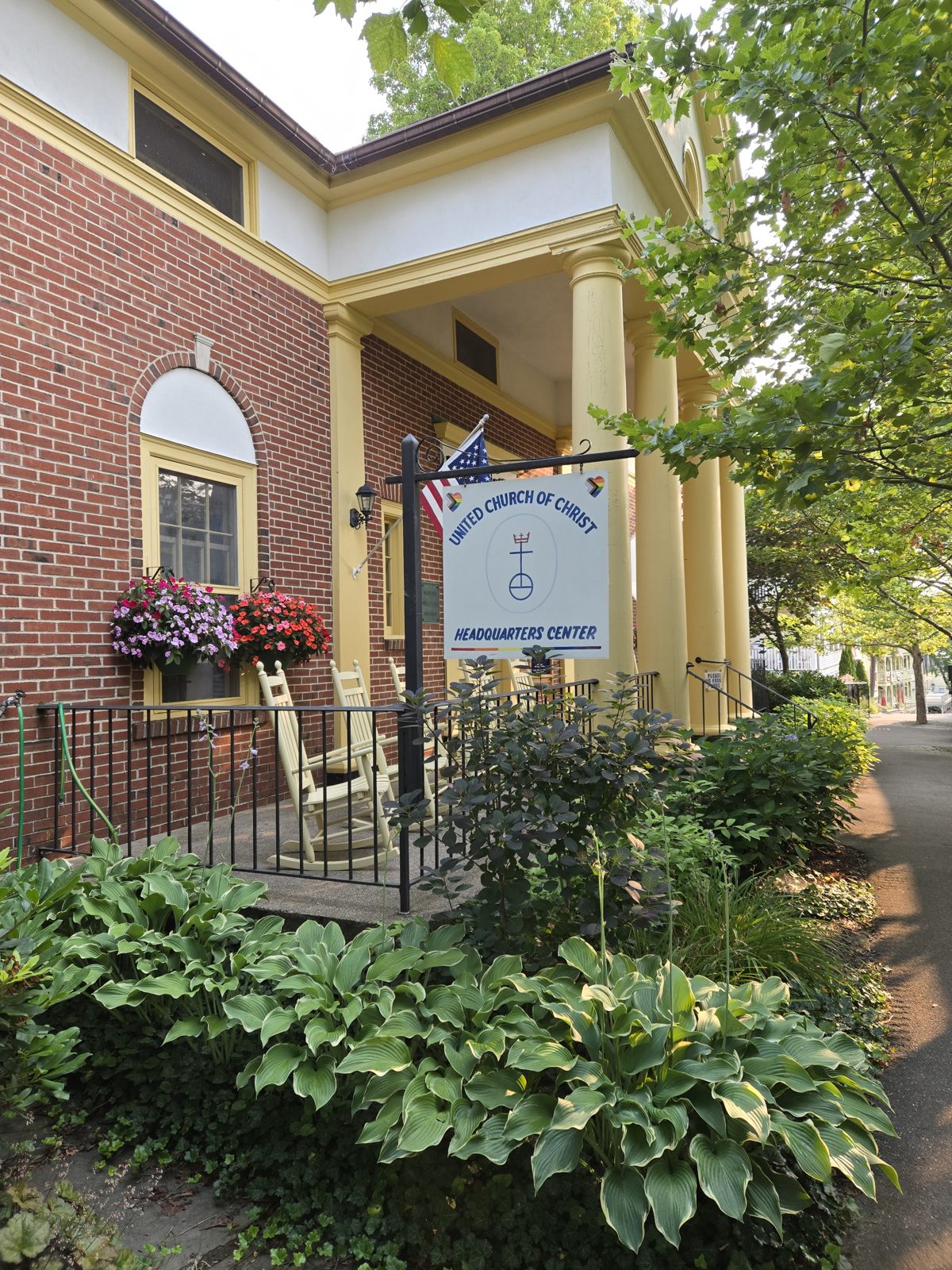
Faith is woven deeply into Chautauqua, although not in a narrow or rigid way. I attended morning worship, an ecumenical Communion service, and the Sacred Song Service. I heard preaching from Rev. Dr. Zina Jacque and spent time visiting some of the denominational houses and chapels scattered throughout the grounds.
One of my favorites was a tiny Episcopal chapel with a bright red door that looked as though it might have been designed for particularly devout hobbits. There I learned that, in their liturgy, the congregation recites the Nicene Creed after the sermon partly as a reminder that, should the preacher wander too far into theological territory, the church has a way of setting things straight again.
As a preacher, I found this strangely delightful.
In fact, it got me thinking about the role of preaching itself. Perhaps a preacher ought to be willing to risk a little heresy now and then—not recklessness, but the courage to ask difficult questions, challenge easy assumptions, and insist that the Gospel has something to say when Christianity is twisted into cruelty, exclusion, or Christian nationalism. Continuing education is supposed to make us think differently about our work, and Chautauqua certainly did that for me.
It also fed the writer in me.
I protected time each morning to work on my own writing, attended writing programs, heard author Stephanie Elizondo Griest, participated in a writers’ critique, and attended Jillian Hanesworth’s program, “Write On: Writing for a Revolution.” I came home with pages of notes, new ideas, and the comforting realization that writers apparently enjoy sitting around talking endlessly about writing almost as much as ministers enjoy talking about church.
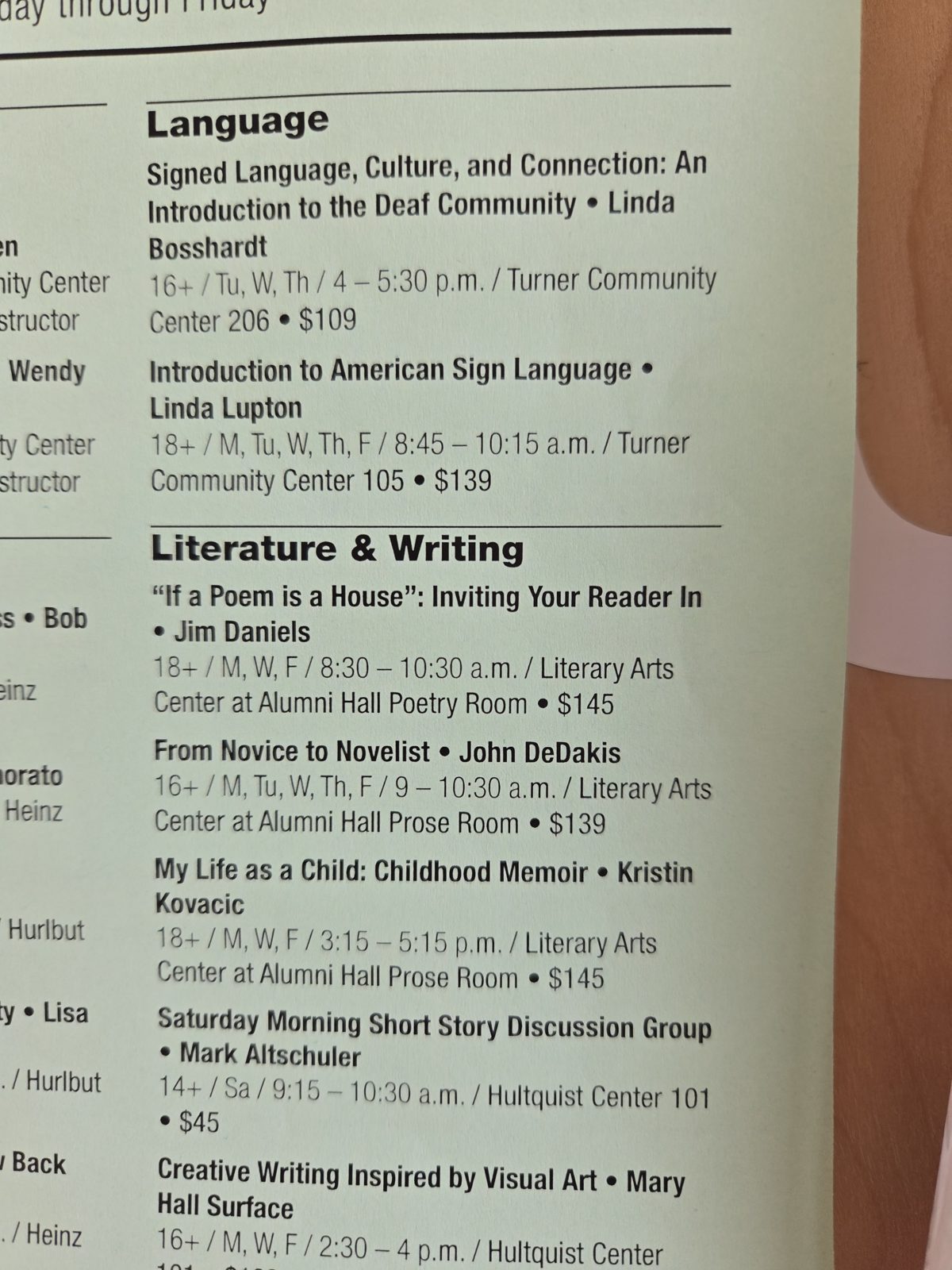
Art was everywhere too. I visited the Strohl Art Center, heard the Verona Quartet and Natalie Merchant, listened to opera and orchestra rehearsals, and saw the Chautauqua School of Dance perform Wuthering Heights. What struck me was that the arts were not treated as an extra or an evening diversion. Music, painting, dance, literature, religion, and public conversation all seemed to belong together.
And perhaps that is what I loved most about Chautauqua.
It is a place where people deliberately come together to think.
They sit on porches and talk. They listen to lectures. They disagree. They read. They make music. They worship. They ask questions. They walk around with coffee cups and books tucked under their arms. For a week, I found myself surrounded by people who seemed genuinely curious about the world and willing to slow down long enough to pay attention to it.
By the end of my time there, I felt almost saturated—in the best possible way—with theology, literature, music, art, conversation, and ideas.
Continuing education for clergy is meant to give us time away from our ordinary routines so that we can learn, reflect, and return to ministry renewed. Chautauqua did exactly that for me. It reminded me that being a pastor is not only about meetings, sermons, budgets, visits, and the thousand practical things that fill a church week. It is also about remaining curious. It is about reading, listening, wondering, creating, and allowing ourselves to encounter ideas that might change us.
For one week this summer, I got to be pastor, writer, reader, student, music lover, theology nerd, and person sitting quietly by a lake with a cup of coffee.
As continuing education goes, it was pretty hard to beat.